Soft Washing for Siding & Roofs Across Central Arkansas
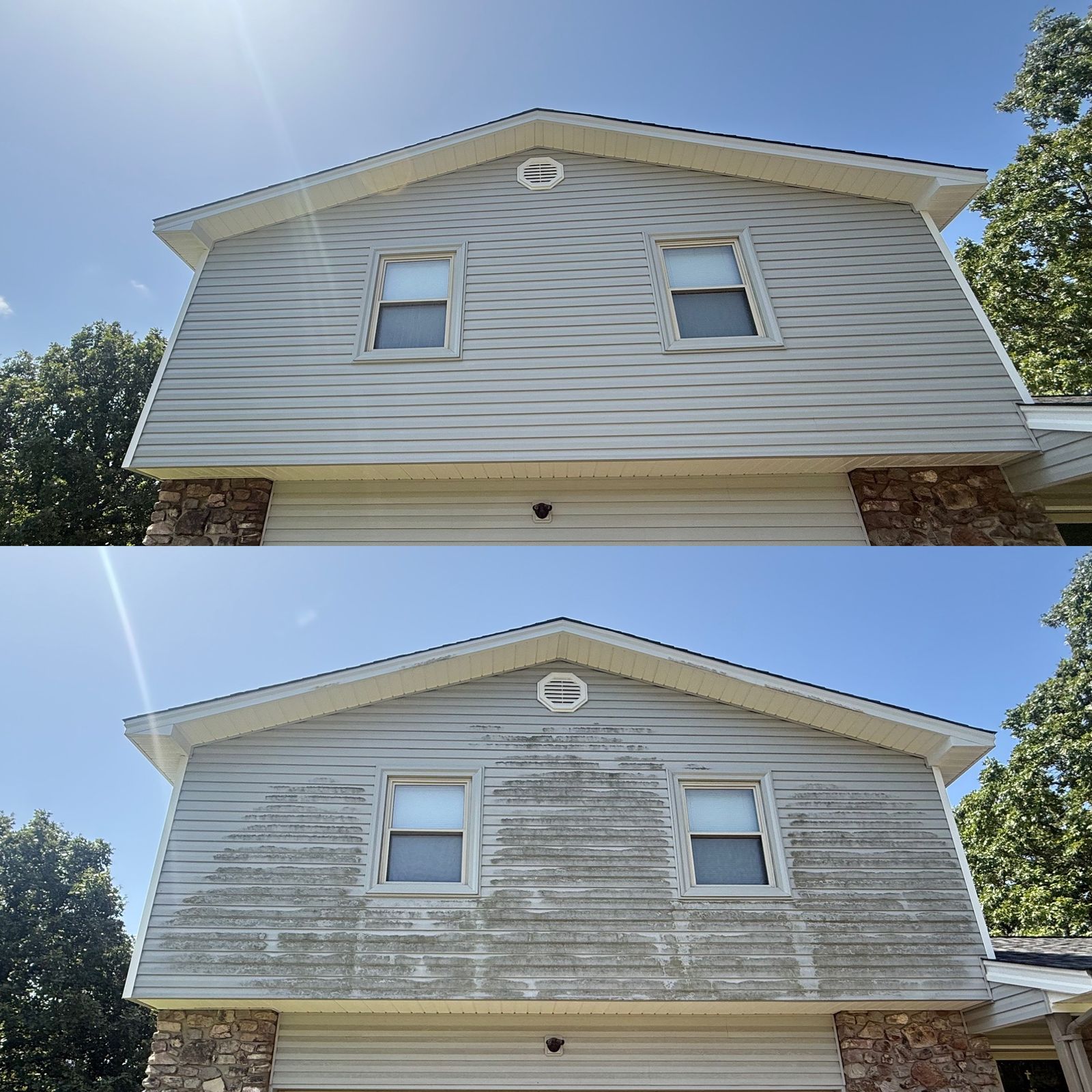
That dark streaking on your siding isn't dirt — it's algae. Soft washing kills it at the root instead of just blasting it off, so it stays cleaner longer.
Why soft washing instead of pressure washing?
Siding, stucco, and roofing aren't built to handle the same pressure as a concrete driveway. Soft washing uses low pressure combined with a cleaning solution that actually kills algae, mold, and mildew at the surface — not just knocks it loose temporarily.
That black streaking you see on a lot of Central Arkansas homes, especially on north-facing walls and roof lines, is algae that thrives in our humidity. Pressure alone can knock it off the surface, but soft washing treats it so it's slower to come back.
We use this method on vinyl and fiber-cement siding, stucco, and asphalt shingle roofs where high pressure could strip granules or force water behind the surface.
What soft washing protects
Protects Your Siding
Low pressure means no risk of forcing water behind panels or stripping paint and finish.
Slows Regrowth
Killing algae at the root means the black streaking takes longer to come back than a pressure-only clean.
Safe for Roofs
Asphalt shingles lose their granules under high pressure — soft washing cleans without that risk.
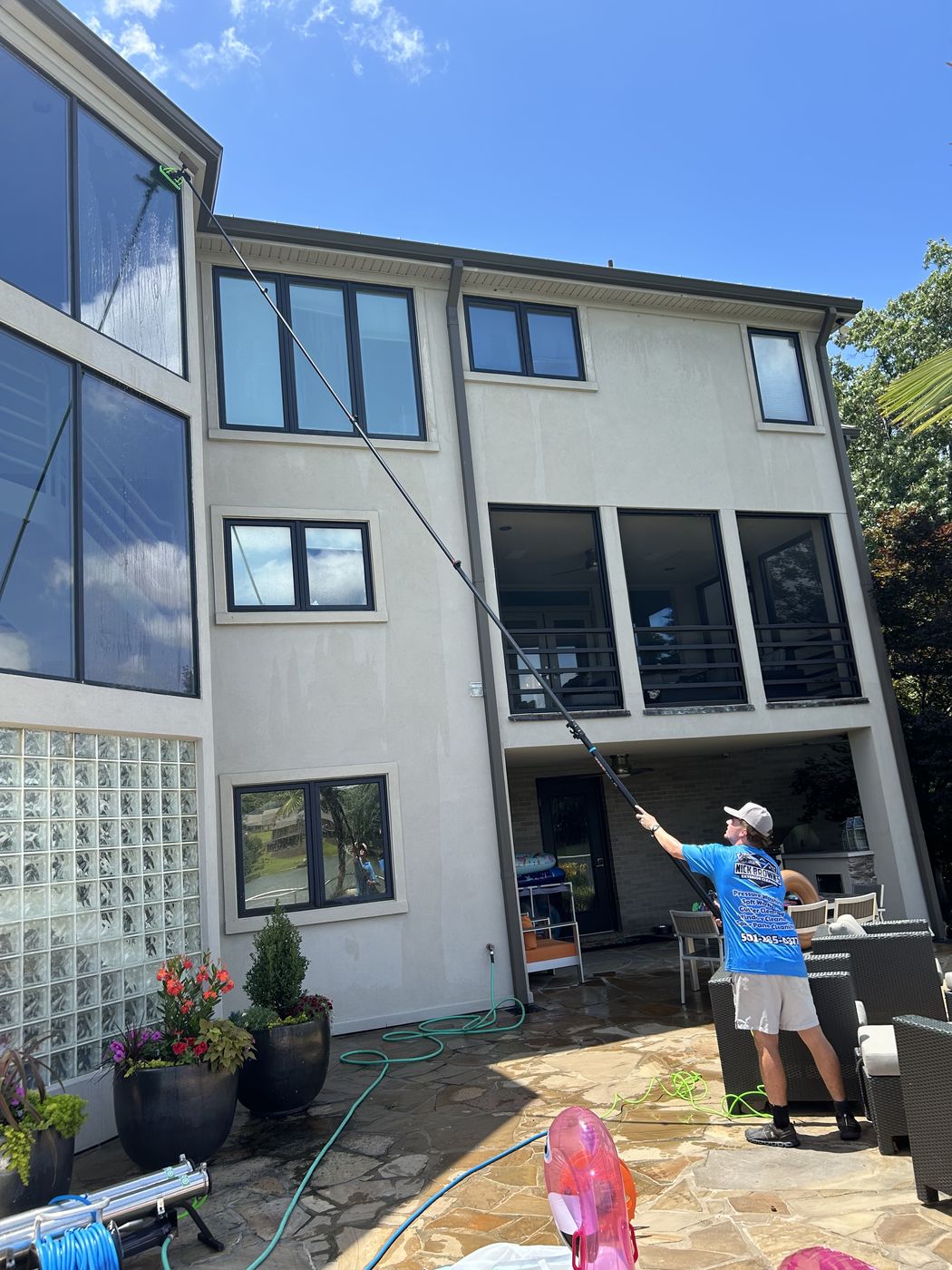
Soft washing questions, answered
Pressure washing uses high-powered water alone, best for tough surfaces like concrete. Soft washing uses low pressure plus a cleaning solution, made for more delicate surfaces like siding, stucco, and roofing where high pressure could cause damage.
That black streaking is algae, not just dirt, so plain water usually won't fully remove it or keep it from coming back quickly. Soft washing treats the algae itself with a cleaning solution, which knocks it down and slows regrowth much longer than pressure alone.
Yes — it's actually the safer option for asphalt shingle roofs. High pressure can strip the protective granules off shingles and shorten their lifespan; soft washing cleans effectively without that risk.
Spring and fall tend to work well — before pollen season gets heavy and before the humidity of summer accelerates algae growth. That said, it can be done anytime conditions allow.
Ready to stop the black streaking?
(501) 285-0377Call or text anytime — open daily until 11 PM